Is Your Vehicle Insurance Still Valid? Check RC, Insurance & RTO Details Online
Are you sure your car or bike insurance is still valid? Many vehicle owners in India drive their vehicles every day without checking their insurance expiry date, Registration Certificate (RC) status, or other important RTO records. An expired insurance policy can create serious problems during traffic police inspections, road accidents, and vehicle-related legal procedures.
Fortunately, checking vehicle insurance status online has become much easier. With your vehicle registration number, you can access available information about insurance validity, RC registration, RTO details, and other vehicle documents through government-supported digital services. These online facilities help vehicle owners stay informed without visiting an RTO office for every routine enquiry.
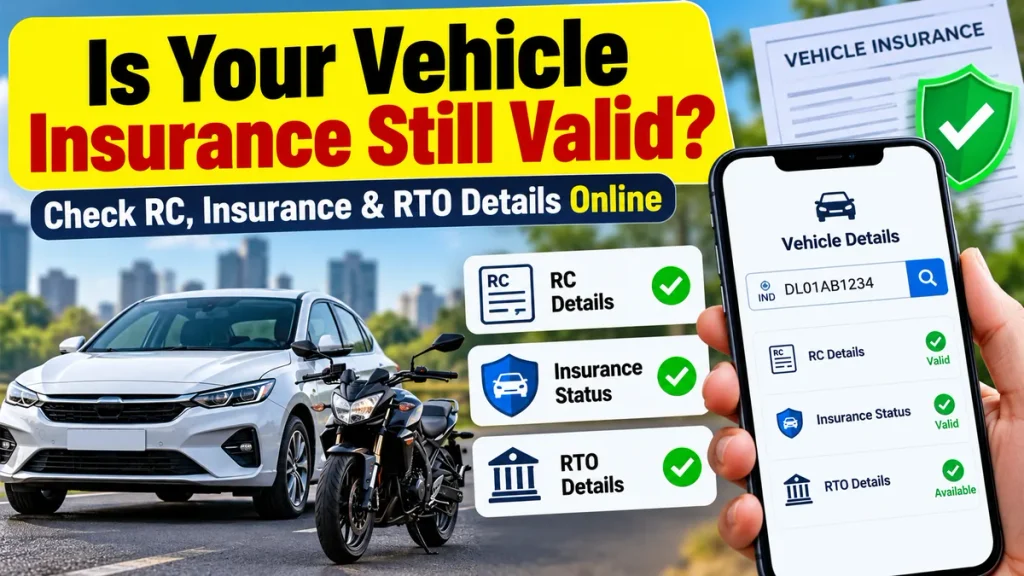
Whether you own a motorcycle, scooter, car, or commercial vehicle, understanding how to check vehicle insurance and registration details is essential. This guide explains how to verify insurance validity online, check RC information, understand RTO records, and take appropriate action when vehicle documents require renewal.
Why Should You Check Your Vehicle Insurance Status?
Vehicle insurance is an important part of responsible vehicle ownership. In India, valid third-party motor insurance is generally mandatory for vehicles used on public roads.
However, insurance policies have specific coverage periods. If your insurance expires, you may lose applicable protection and face legal consequences when driving without mandatory coverage.
Regularly checking your vehicle insurance status offers several advantages.
- Avoid insurance expiry: Identify approaching renewal dates before coverage ends.
- Maintain legal compliance: Confirm that your vehicle has the required third-party insurance.
- Protect your finances: Understand your coverage before unexpected accidents or damage.
- Verify vehicle records: Compare insurance information with registration details.
- Support used-vehicle purchases: Check available insurance information before purchasing a second-hand vehicle.
Checking the validity date periodically helps prevent avoidable difficulties.
How to Check Vehicle Insurance Validity Online
Vehicle owners can verify available motor insurance information through the VAHAN vehicle information services operated under the Ministry of Road Transport and Highways.
The process is generally straightforward, although login requirements and available information may vary.
Step-by-Step Vehicle Insurance Status Check
Step 1: Visit the Parivahan Vehicle Information Service
Open the official Parivahan platform and locate the vehicle-related information services.
Step 2: Select Know Your Vehicle Details
Find the option that allows users to search for vehicle registration information.
Step 3: Complete the Required Verification
Depending on the service, you may need to sign in using a mobile number and complete OTP verification.
Step 4: Enter Your Vehicle Registration Number
Type your car or bike registration number carefully, including the correct letters and digits.
Step 5: View Available Vehicle Information
After verification, the system may display available vehicle details, including registration status and insurance validity.
Step 6: Check the Insurance Expiry Date
Compare the displayed insurance validity date with the current date.
If the policy appears expired, check your insurer’s records and renew the required coverage before using the vehicle on public roads.
Remember that government records can sometimes take time to reflect a recently renewed policy.
Vehicle RC, Insurance & RTO Details – Complete Overview
The following table explains important vehicle information that owners may be able to verify through official vehicle services.
| Vehicle Information | Details You Can Check | Why It Matters |
|---|---|---|
| Registration Number | Vehicle’s registered number | Identifies the vehicle |
| RC Status | Available registration information | Confirms registration records |
| Insurance Validity | Insurance expiry date | Helps identify renewal requirements |
| RTO Details | Registering authority | Identifies the relevant RTO |
| Vehicle Class | Car, motorcycle, commercial vehicle, etc. | Confirms vehicle classification |
| Fuel Type | Petrol, diesel, CNG, electric, etc. | Verifies vehicle information |
| PUC Validity | Pollution certificate expiry | Helps maintain compliance |
| Fitness Status | Fitness validity, where applicable | Important for eligible vehicles |
| Registration Date | Original registration date | Useful for vehicle verification |
Some information may be masked or unavailable depending on the vehicle and access permissions.
How to Check RC Details Online Using Vehicle Number
Your Registration Certificate is one of the most important documents associated with your vehicle. It contains official registration information maintained by the relevant transport authority.
Vehicle owners can check available RC details online to confirm whether registration records are accurate.
Information Available Through RC Verification
Depending on the service and applicable access restrictions, RC information may include:
- Vehicle registration number.
- Registration date.
- Registering RTO authority.
- Vehicle make and model.
- Vehicle class and fuel type.
- Registration validity.
- Available insurance and pollution certificate status.
To perform the check, access the official vehicle information service, enter the registration number, and complete any required authentication.
For complete information about your own registered vehicle, you may need to access your authenticated digital RC.
Check Vehicle Details Through the mParivahan App
The mParivahan application provides mobile access to several vehicle-related services.
It connects with official transport records and allows users to access available information about registered vehicles, driving licences, and other transport-related documents.
Benefits of Using mParivahan
- Search for available vehicle registration information.
- Check recorded insurance validity.
- Access digital RC information for eligible authenticated users.
- Review available driving licence details.
- Check vehicle-related document validity.
- Access selected transport and RTO services.
The application is particularly useful for vehicle owners who prefer checking documents from their smartphones.
However, always verify that you are installing the genuine government-supported application rather than a similarly named unofficial app.
What Happens If Your Vehicle Insurance Has Expired?
Driving without legally required insurance can result in penalties and other consequences under Indian motor vehicle laws.
Insurance expiry may also expose vehicle owners to significant financial risks.
Legal Consequences
Section 146 of the Motor Vehicles Act establishes the requirement for third-party insurance, while Section 196 addresses offences involving uninsured vehicles. Applicable penalties should be checked against the latest law and local enforcement rules.
Avantis CDN Prod Storage
+1
Financial Consequences
If an accident occurs while the required insurance is not valid, the owner may face significant personal financial liability.
A previously expired policy generally does not provide automatic protection for accidents occurring during an uninsured period.
Renewal Difficulties
Allowing insurance to remain expired can also complicate renewal.
Depending on the insurer and type of coverage, a vehicle inspection or additional verification may be necessary before certain protections are restored.
For these reasons, renewing insurance before the expiry date is the safer approach.
Third-Party Insurance vs Comprehensive Vehicle Insurance
Understanding different motor insurance policies can help vehicle owners choose suitable financial protection.
| Feature | Third-Party Insurance | Comprehensive Insurance |
|---|---|---|
| Mandatory third-party protection | Yes | Usually included |
| Third-party injury liability | Covered as per policy and law | Covered as per policy and law |
| Third-party property damage | Subject to policy terms and limits | Subject to policy terms and limits |
| Damage to your own vehicle | Not covered | Covered for insured risks |
| Theft protection | Not included | Generally included |
| Natural disaster protection | Not included | Generally included for covered events |
| Premium | Generally lower | Generally higher |
Comprehensive policies usually provide broader protection, but exclusions, deductibles, insured declared value, and optional add-ons affect actual coverage.
Vehicle owners should compare policy terms instead of choosing insurance based only on the lowest premium.
How to Renew Expired Vehicle Insurance
If your car or bike insurance has expired, taking action promptly is important.
Begin by checking the existing policy document and identifying the insurer, policy type, and expiry date.
Next, contact your insurance provider or an authorised insurance distribution channel to explore renewal options.
Compare available plans according to premium, coverage, deductibles, claim conditions, and additional benefits.
Before completing the payment, verify the vehicle registration number and other relevant policy details.
After renewal, save the updated insurance certificate and confirm the effective coverage start date.
Do not assume that payment automatically creates retrospective coverage for an earlier uninsured period.
Why Vehicle Insurance Status May Not Show Updated Information
Sometimes, a newly purchased or renewed insurance policy does not immediately appear in online vehicle records.
Possible reasons include delayed database synchronisation, incorrect registration information, or incomplete insurer reporting.
If this happens, check your insurance certificate and confirm the policy status directly with your insurer.
Keep your valid insurance documents available while requesting corrections through the appropriate insurer or transport service.
An outdated online record does not automatically mean that your insurance policy is invalid, but it should be investigated.
Important Tips Before Buying a Used Car or Bike
Checking insurance and RC details is especially valuable when purchasing a second-hand vehicle.
Before making payment, compare the vehicle registration number with the physical registration plate and relevant documents.
Review the RC information, insurance validity, registration status, and any available fitness or PUC details.
Ask the seller for the current insurance certificate and verify it with the insurance company when necessary.
Also examine whether ownership transfer, insurance transfer, outstanding finance, and applicable RTO formalities have been properly addressed.
A vehicle registration search is useful, but it should not replace a physical vehicle inspection and proper document verification.
Frequently Asked Questions (FAQs)
1. Can I check vehicle insurance validity using only the registration number?
You can search for available insurance validity information using a vehicle registration number through supported services. Mobile login or OTP verification may also be required.
2. How can I check my bike insurance expiry date online?
Use the official vehicle information service or mParivahan to view the recorded insurance validity date. You can also check your insurer’s policy document.
3. Is it possible to check RC details online?
Yes. Government-supported vehicle information services allow users to check available registration details. Access to complete records may require authentication.
4. Can I check another vehicle’s insurance status?
Limited, non-sensitive vehicle information may be available through authorised searches. Private owner information is subject to access restrictions.
5. What should I do if my insurance has expired?
Contact an authorised insurance provider, arrange appropriate coverage, and confirm the new policy’s effective date before driving.
6. Is third-party vehicle insurance compulsory in India?
Yes. Third-party insurance is generally mandatory for motor vehicles used on public roads under the Motor Vehicles Act.
7. Why is my renewed insurance not showing on VAHAN?
Updates may be delayed because of database synchronisation or reporting issues. Contact your insurance provider if the recorded information remains incorrect.
8. Can I check insurance, RC, and PUC information together?
Services such as mParivahan can display multiple vehicle-related validity details where those records are available.
9. Does RC verification reveal the vehicle owner’s complete personal details?
Not necessarily. Publicly accessible vehicle searches restrict sensitive personal information, and certain details may be masked.
10. Can I renew vehicle insurance from my mobile phone?
Yes. Many authorised insurers provide mobile-friendly purchase and renewal facilities, subject to their verification requirements.
Conclusion
Checking whether your vehicle insurance is still valid is an essential responsibility for every car and bike owner in India. A simple vehicle registration search can help you review available insurance validity, RC information, RTO registration details, and other important document records.
Using official platforms such as Parivahan and mParivahan makes vehicle document verification more convenient and accessible. However, online information should always be cross-checked with your insurance provider whenever records appear incomplete or outdated.
Before your next journey, check your vehicle insurance expiry date, verify your RC details, and ensure your mandatory documents are valid. A few minutes of verification can help you avoid unnecessary complications, maintain legal compliance, and enjoy a more secure driving experience.