Language Learning Audio Apps – Practice English Through Listening
Learning English has become an important skill for education, career development, travel, and everyday communication. However, many beginners find it difficult to understand spoken English, especially when native speakers talk naturally. Language Learning Audio Apps provide convenient opportunities to practise listening, recognize common expressions, and become familiar with different pronunciation patterns using smartphones.
Modern English learning applications offer recorded conversations, interactive audio lessons, podcasts, vocabulary exercises, and pronunciation activities. Instead of depending entirely on textbooks, learners can listen to everyday dialogues and practise understanding spoken sentences at their own pace.
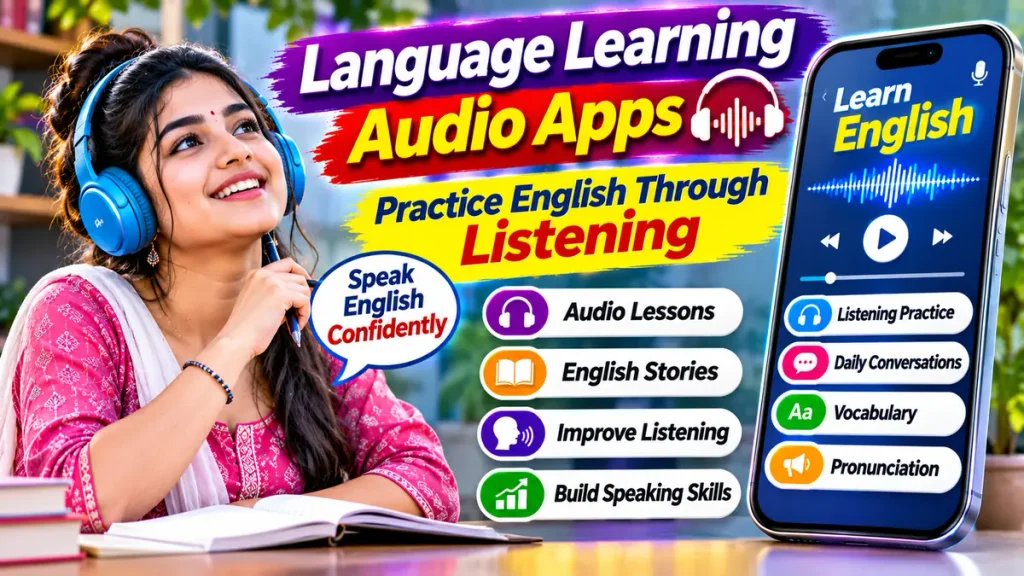
Whether you are a student, job seeker, working professional, or beginner, an English Listening Practice App can support your language learning routine. This guide explores popular applications, important features, comparison tables, and practical methods for improving English listening skills.
What Are Language Learning Audio Apps?
Language Learning Audio Apps are educational applications that help users develop listening comprehension through recorded speech and interactive exercises.
These platforms provide spoken English lessons covering vocabulary, pronunciation, grammar, and everyday conversations.
Common features include:
- English listening exercises.
- Daily conversation recordings.
- Pronunciation practice.
- Vocabulary audio lessons.
- Interactive listening quizzes.
- Adjustable playback speed.
- Downloadable lessons.
- Progress tracking.
Available features depend on the application, learning level, and subscription conditions.
Best Language Learning Audio Apps for English
Several established educational platforms provide English listening resources.
1. British Council LearnEnglish Podcasts
British Council LearnEnglish Podcasts is an educational application designed to help learners understand spoken English.
It provides recorded conversations discussing everyday topics, culture, and useful language expressions.
Important Features:
- English conversation podcasts.
- Interactive audio scripts.
- Vocabulary practice.
- Listening comprehension exercises.
- Adjustable audio speed.
- Downloadable episodes.
- Learning progress tracking.
The application is particularly useful for learners who want structured audio practice.
Listening while reading the transcript can help users identify unfamiliar words and understand sentence structure.
2. Duolingo – Interactive English Listening
Duolingo is a language learning application offering short lessons through interactive exercises.
Its courses include listening activities alongside vocabulary, reading, and speaking practice.
Important Features:
- Short listening exercises.
- Spoken sentence recognition.
- Vocabulary activities.
- Interactive quizzes.
- Slower audio playback.
- Lesson progress tracking.
- Practice reminders.
Duolingo offers free learning access with optional paid subscriptions.
It is useful for beginners who prefer short, structured lessons rather than long audio recordings.
3. BBC Learning English – Audio Learning Resources
BBC Learning English provides educational programmes focused on vocabulary, pronunciation, listening, and everyday communication.
Learners can explore recordings designed for different proficiency levels.
Important Features:
- English conversation programmes.
- Pronunciation lessons.
- Everyday vocabulary.
- Short educational podcasts.
- Workplace English.
- Listening activities.
- Audio learning resources.
Popular programme categories include everyday expressions, short conversations, and English used in professional situations.
BBC Learning English is particularly useful for learners interested in British English pronunciation.
English Listening Apps Comparison Table
| Learning Platform | Main Features | Best For |
|---|---|---|
| British Council | Podcasts, transcripts, comprehension exercises | Structured listening |
| Duolingo | Short audio lessons, quizzes | Beginners |
| BBC Learning English | Conversations, vocabulary, pronunciation | Practical English |
Note: Application features, lesson availability, and subscription conditions may change.
Popular English Audio Learning Categories
Different listening activities support different language skills.
| Audio Category | Learning Focus |
|---|---|
| Daily Conversations | Everyday expressions |
| Pronunciation Lessons | English sounds and word stress |
| Vocabulary Audio | Common words and phrases |
| English Podcasts | Extended listening practice |
| Interview Conversations | Questions and responses |
| Business English | Workplace communication |
| Short Stories | Listening comprehension |
Learners can select activities according to their current English level.
How to Practise English Listening on Mobile
Follow these steps to develop a consistent listening routine.
Step 1: Choose a Trusted Application
Select an English learning platform offering suitable audio lessons.
Step 2: Identify Your Learning Level
Start with beginner content if ordinary conversations seem difficult.
Step 3: Select a Short Lesson
Choose a recording covering familiar subjects.
Step 4: Listen Without Reading
Try understanding the general meaning before checking the transcript.
Step 5: Read the Audio Transcript
Identify unfamiliar vocabulary and expressions.
Step 6: Listen Again
Replay difficult sections and focus on pronunciation.
Step 7: Repeat Important Sentences
Practise speaking selected phrases aloud.
Step 8: Complete Listening Exercises
Use available quizzes to evaluate comprehension.
Step 9: Review Regularly
Repeat useful lessons and gradually explore more challenging recordings.
Free English Learning Apps vs Premium Features
| Feature | Free Access | Premium Access |
|---|---|---|
| Listening Lessons | Available selections | Additional content may apply |
| Vocabulary Practice | Usually available | Expanded features |
| Pronunciation Activities | Basic exercises | Additional tools may apply |
| Advertisements | Platform-dependent | Often reduced |
| Offline Lessons | Depends on application | May be available |
| Subscription Payment | Not required | Optional |
British Council resources and BBC Learning English offer valuable free educational material.
Benefits of Learning English Through Listening
Understand Everyday Conversations
Regular exposure helps learners recognize familiar phrases in spoken communication.
Improve Pronunciation Awareness
Listening carefully introduces different English sounds, rhythms, and stress patterns.
Build Practical Vocabulary
Audio lessons provide examples of words used in meaningful situations.
Practise Conveniently
Short recordings can fit into suitable moments during daily routines.
Develop Listening Confidence
Gradual practice may make unfamiliar conversations feel easier to follow.
However, listening alone does not guarantee fluent speaking. Conversation practice remains important.
Tips for Improving English Listening Skills
Begin with clear, slower recordings before exploring faster conversations.
Listen to the same lesson several times.
Use subtitles or transcripts when necessary.
Practise recognizing complete phrases instead of translating every word.
Repeat useful expressions aloud.
Include both British and American English recordings.
Set realistic daily learning goals.
Avoid expecting perfect comprehension immediately.
Consistent listening combined with speaking, reading, and writing creates a more balanced learning routine.
Frequently Asked Questions (FAQs)
1. Which is the best app for English listening practice?
British Council LearnEnglish Podcasts, Duolingo, and BBC Learning English offer useful listening resources. The best choice depends on proficiency and learning preferences.
2. Can beginners learn English through audio apps?
Yes. Beginner-friendly recordings introduce common vocabulary, short sentences, and everyday expressions.
3. Are English listening apps free?
Several platforms offer free learning resources, while additional features may require payment.
4. Can listening improve spoken English?
Listening supports pronunciation awareness and vocabulary development. Speaking practice is also necessary for conversational improvement.
5. Can I practise English listening offline?
Some applications support downloadable audio lessons. Availability depends on the selected platform.
6. How long should I practise English listening daily?
Beginners can start with ten to fifteen minutes and gradually increase practice according to their schedules.
Conclusion
Language Learning Audio Apps provide convenient opportunities to practise English through conversations, pronunciation exercises, vocabulary lessons, and educational podcasts. These resources help learners become more familiar with natural spoken English while developing practical listening habits.
British Council LearnEnglish Podcasts, Duolingo, and BBC Learning English offer different approaches to language learning. Choose suitable lessons, practise consistently, and combine listening with speaking activities to develop stronger communication skills.
Disclaimer
This article is provided for general educational and informational purposes only. Language learning application features, subscription prices, free lesson availability, offline downloads, and device compatibility may change without notice. All mentioned platforms are independent services, and no affiliation or endorsement is implied. English learning progress depends on individual ability, practice consistency, and learning methods. Audio applications do not guarantee fluency, examination success, employment opportunities, or specific educational outcomes. Readers should verify current application features and subscription conditions before making purchases.